Lightweight in the Wholesale Chain: A Practical Overview — Cash and Carry Notes
VapeWholesaleHub Lightweight · Lightweight hardware build
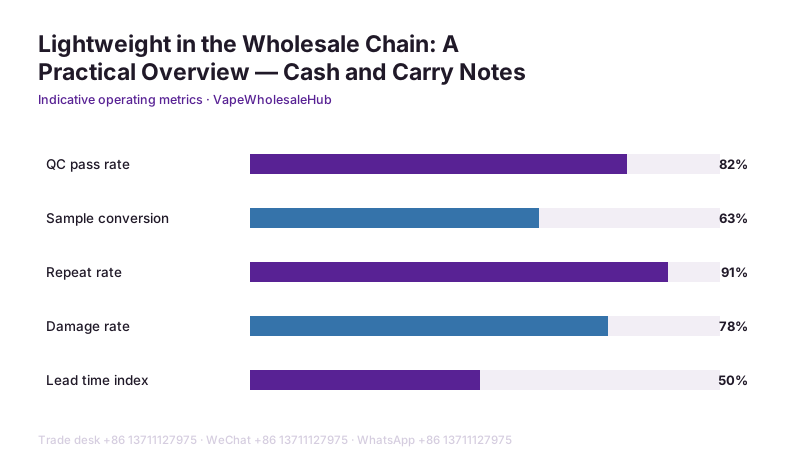
Most conversations about lightweight in the Wholesale Chain: A Practical Overview — Cash and Carry Notes start in the wrong place. Someone asks for a price per unit before anyone has agreed what the unit actually is. This page works through the subject the way a purchasing desk experiences it, from the first sample request to the container arriving at the dock.
What quality control looks like in practice
Quality control on lightweight in the Wholesale Chain: A Practical Overview — Cash and Carry Notes is unglamorous and repetitive, which is exactly why it works. Incoming inspection, fill weight checks, leak testing and a retained sample from every batch. None of this is clever; all of it is cheaper than a recall.
The failure modes in lightweight in the Wholesale Chain: A Practical Overview — Cash and Carry Notes are predictable once you have seen enough of them. Seals that relax in heat, tolerances that drift after a tooling change, inputs that separate in transit. Testing for the known failure modes catches roughly ninety percent of what would otherwise reach a customer.
Documentation and regulatory reality
Compliance is where lightweight in the Wholesale Chain: A Practical Overview — Cash and Carry Notes either holds together or quietly falls apart. Regulators are not interested in intent; they want documents that match the physical goods. If the label says one thing and the test report says another, the shipment is the problem, not the paperwork.
Buyers sometimes treat compliance for lightweight in the Wholesale Chain: A Practical Overview — Cash and Carry Notes as a cost to be minimised. It reads better as a moat. When the market tightens, the accounts that already hold complete technical files keep trading while everyone else scrambles to produce paperwork that should have existed a year earlier.
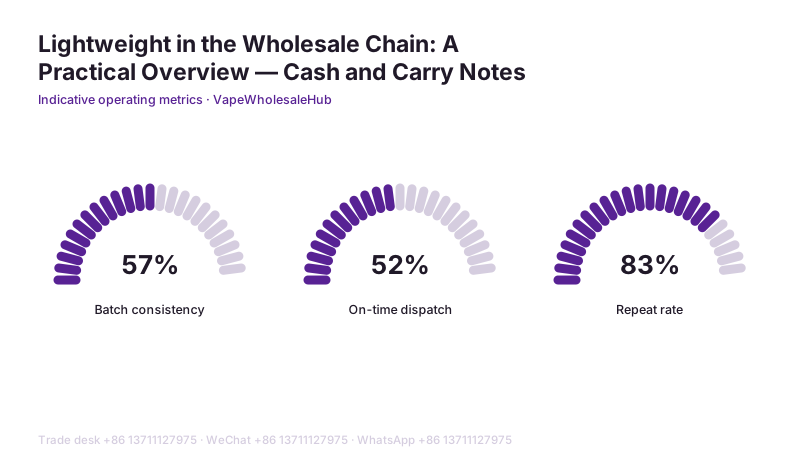
Freight, packaging and landed cost
Logistics decides whether lightweight in the Wholesale Chain: A Practical Overview — Cash and Carry Notes is profitable more often than product quality does. A three day saving on a freight route is worth more per unit than most price negotiations, and it is usually easier to achieve. Mode choice, consolidation and customs pre-clearance are where the margin actually lives.
Packaging is part of logistics, not marketing. Cartons for lightweight in the Wholesale Chain: A Practical Overview — Cash and Carry Notes need to survive stacking, humidity and a forklift operator having a bad Monday. We specify board grade and pallet pattern before we talk about print finish, because a damaged pallet costs more than any artwork upgrade recovers.
Where the supply actually comes from
On the sourcing side, lightweight in the Wholesale Chain: A Practical Overview — Cash and Carry Notes comes down to how much of the chain you can see. A trading desk that only ever talks to a sales rep is buying on faith. We prefer accounts that ask for the factory audit, the mixing records and the batch numbers, because that paperwork is what protects everyone when a shipment is questioned later.
Sourcing decisions around lightweight in the Wholesale Chain: A Practical Overview — Cash and Carry Notes are usually made on price and then regretted on consistency. The input changes, the tolerance drifts, and suddenly the line that sold through in March behaves differently in July. Locking the input specification in writing is the cheapest insurance a wholesale buyer can buy.
Order structure at a glance
| Item | Standard | Volume | Programme |
|---|---|---|---|
| Typical order unit | Master carton | Pallet | Full container |
| Documentation | COA + SDS | COA + SDS + batch record | Full technical file |
| Lead time | 2-4 working days | 5-10 working days | 15-25 working days |
| Customisation | Label only | Label + closure + bottle | Full OEM / ODM |
| Sampling | Charged, credited on order | Included in development | Multi-round approval |
| Indicative MOQ | 500 units | 2,500 units | 10,000 units |
| Development window | n/a | 3-5 working days | 3-5 + approval |
Common questions
How are samples handled?
Sample packs are charged at cost with the shipping borne by the buyer, and the amount is credited against your first bulk order. That keeps sampling serious and avoids the delays that come with an open-ended free sample programme.
What happens if goods arrive damaged?
Photograph the cartons before unpacking, keep the packaging, and send the batch code with your claim. We settle legitimate freight damage as a credit or replacement on the following order rather than leaving it open for months.
Can you supply documentation for our regulator?
Yes. Technical files, certificates of analysis, safety data sheets and batch records are provided with shipments on request. Tell us which national scheme you operate under at the enquiry stage and we will confirm exactly which documents come as standard.
Related reading
- Lightweight: Reconciling Stock Counts — Regional Depot Guide
- Lightweight Vape Supply Notes 1170
- Lightweight Vape Supply Notes 1328
- Managing Lightweight Across Multiple Warehouses — Bulk Order Planning
- Lightweight and component wear: A Cost Perspective — Bulk Order Planning
- Lightweight: Reconciling Stock Counts — Online Reseller Notes
Talk to the wholesale desk. Specifications, MOQ, stock and freight options for lightweight in the Wholesale Chain: A Practical Overview — Cash and Carry Notes.
Phone +86 13711127975 · WeChat +86 13711127975 · WhatsApp +86 13711127975